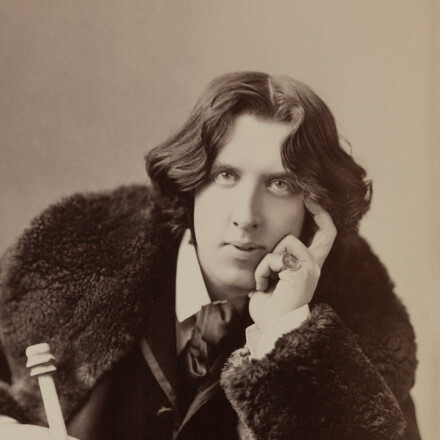
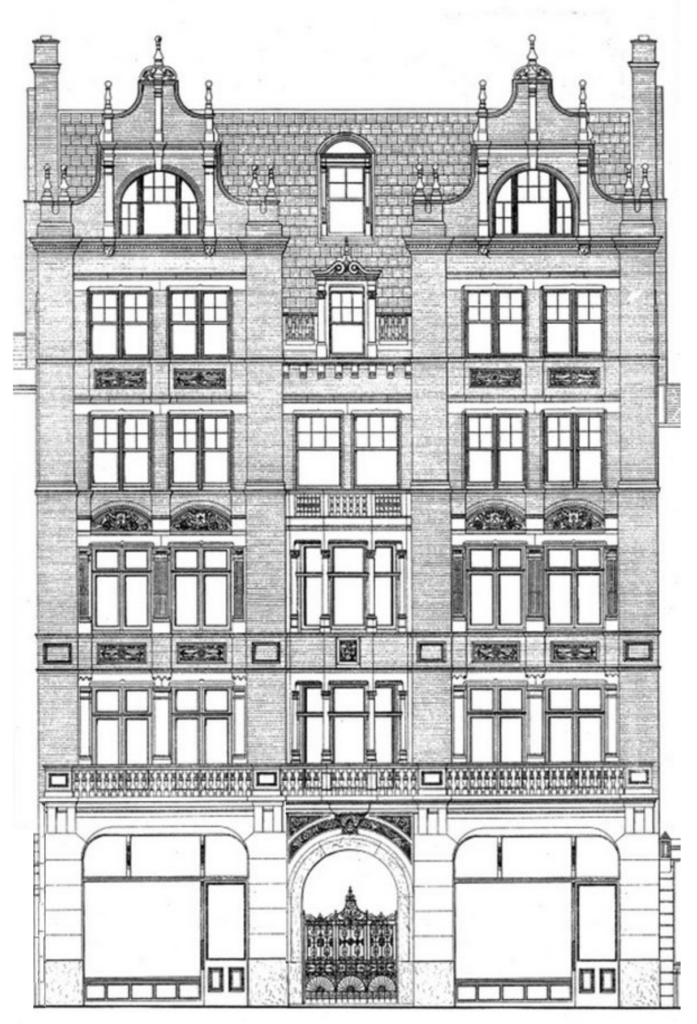
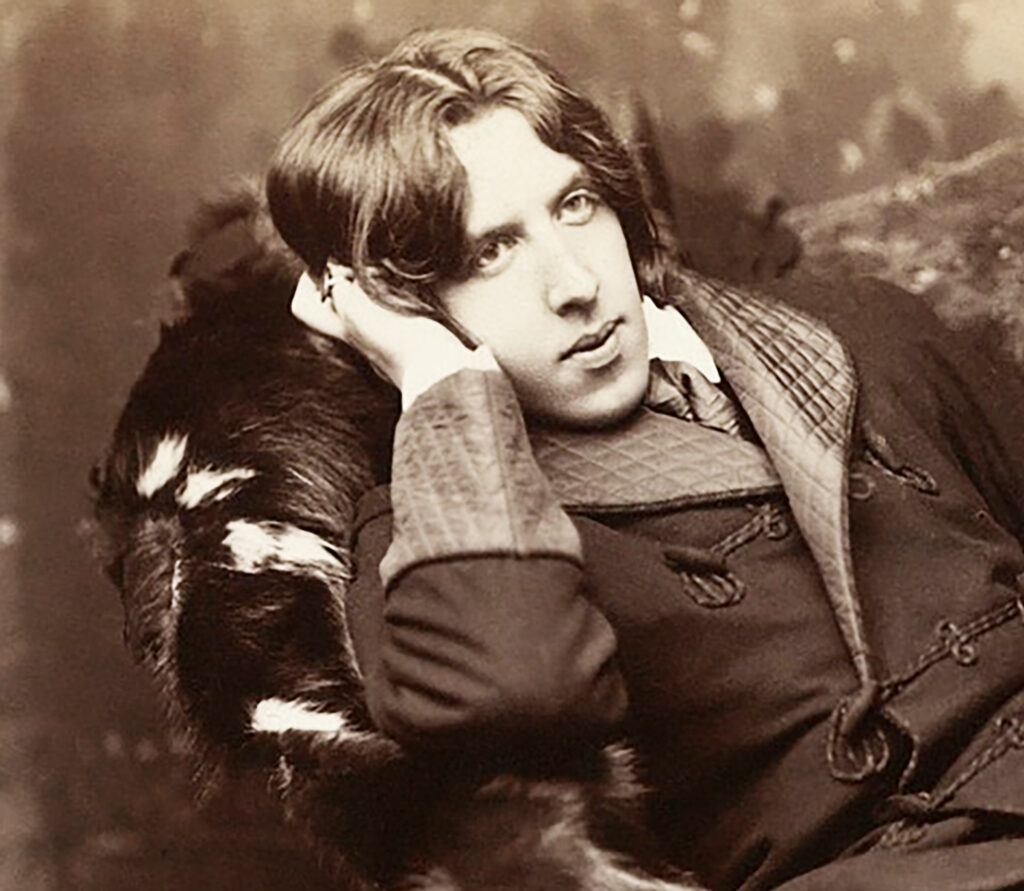
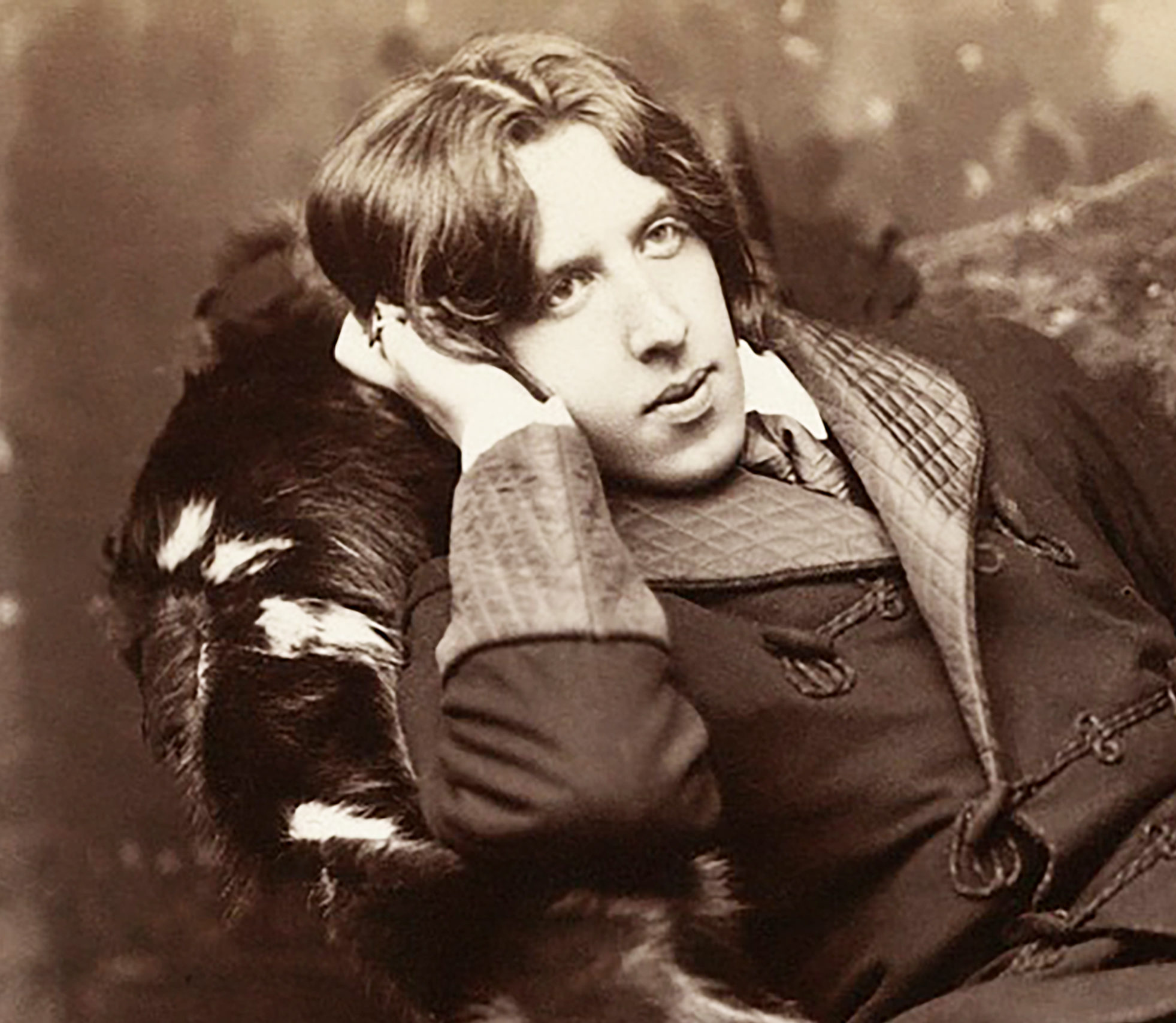
In July 1890, Oscar Wilde called at the Whitefriars Club’s rooms at Anderton’s Hotel and had a long talk about Dorian Gray with Friar Sidney Low, then editor of the St James’s Gazette.
In July 1890, Oscar Wilde called at the Whitefriars Club’s rooms at Anderton’s Hotel and had a long talk about Dorian Gray with Friar Sidney Low, then editor of the St James’s Gazette.
There is no record of Oscar Wilde ever being present at one of the club’s dinners, although he may have attended as a guest of Sidney Low himself.
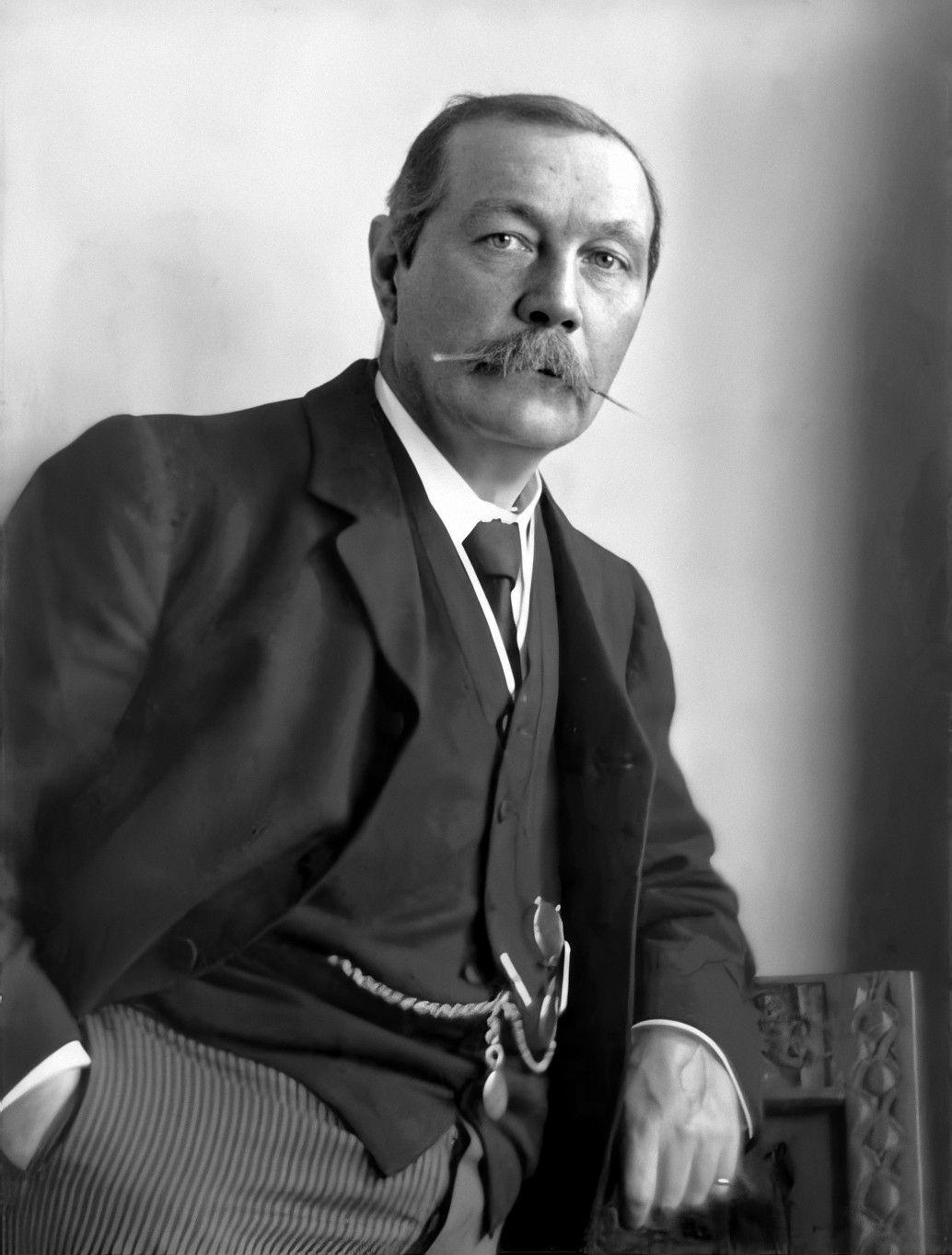
Arthur Conan Doyle (1859–1930) is the celebrated author of many adventure novels, including The Lost World and The Poison Belt, and the creator of the hugely popular detective stories of Sherlock Holmes.
He spoke at the Whitefriars Club on 11th January 1901 on ‘The Art of Fiction’
He was a guest of the club on 22nd February 1907 (Annual Dinner at the Trocadero) and 13th December 1907 (Christmas Dinner at the Trocadero).
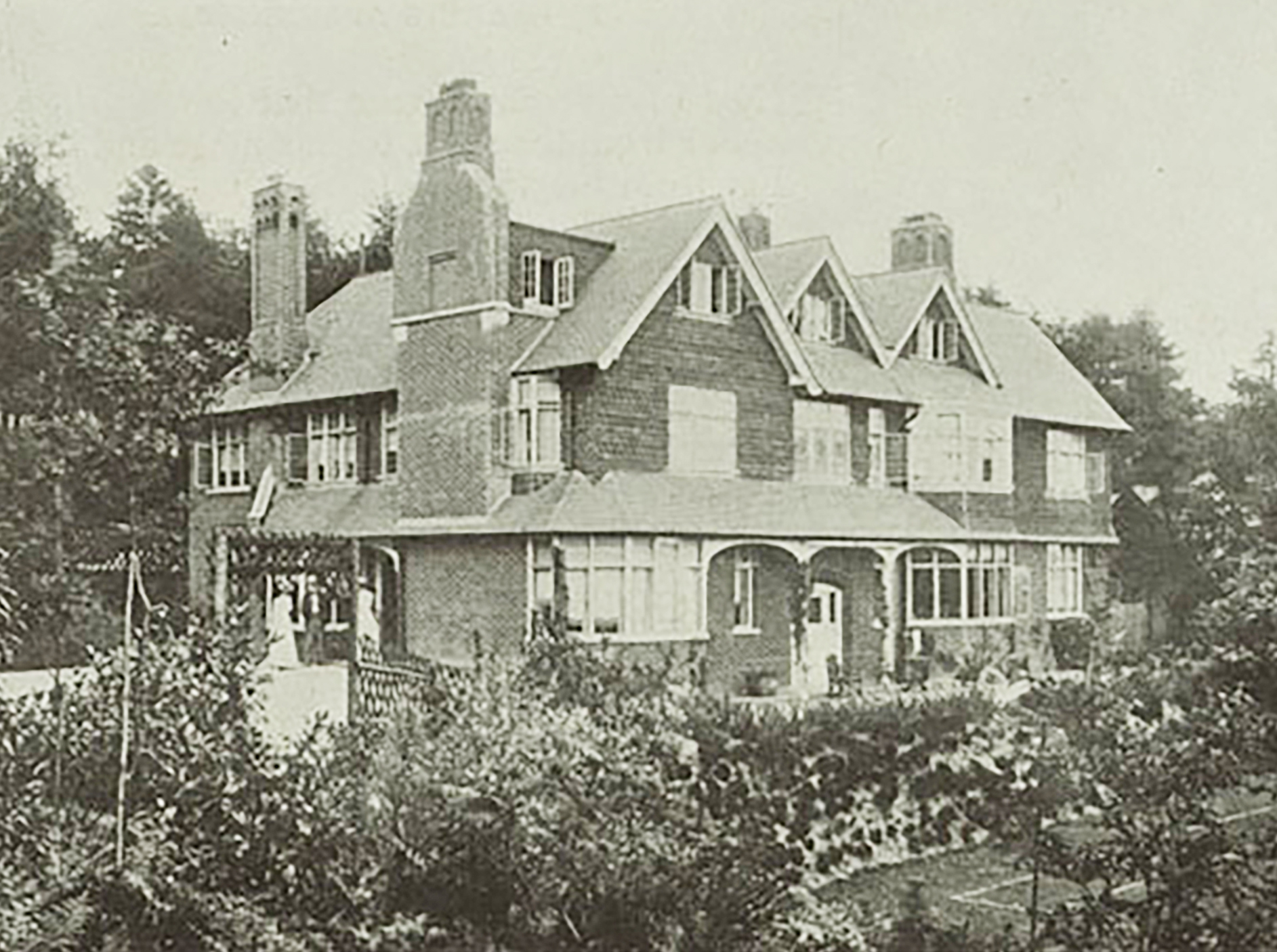
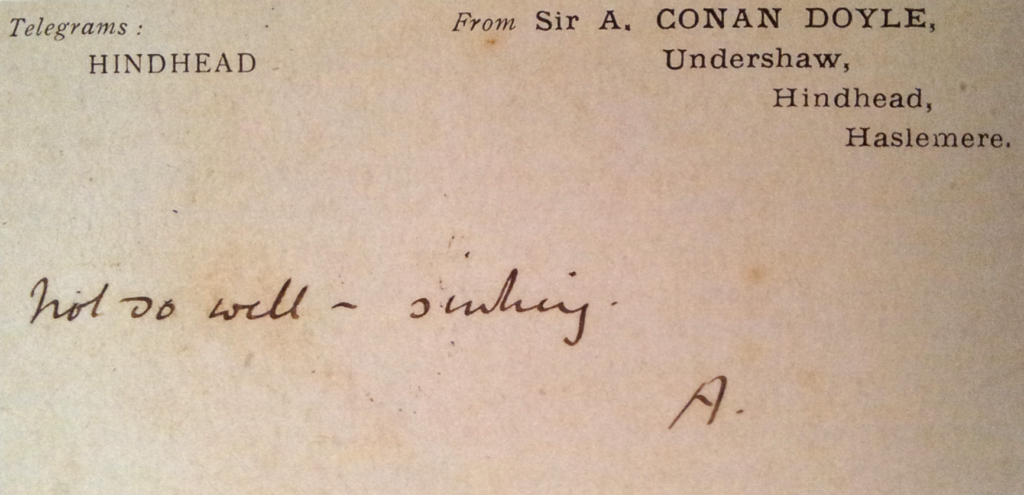
The July 1906 Pilgrimage to Tennyson country was one of the most anticipated events of the year. The Whitefriars Journal of April 1906 wrote: “It is unnecessary to repeat the information in the circular in regard to the summer pilgrimage to Hindhead, but the very kind way in which Lord Tennyson, Sir Arthur and Lady Conan Doyle, Dr and Mrs Rideal and others have interested themselves to ensure that the occasion shall be memorable justifies the Committee in the belief that this most picturesque and carefully planned excursion will strongly appeal to the Friars and their ladies.” Unfortunately, on 4th July 1906, a few days before the arrival of the Whitefriars party, Louise, the first Lady Conan Doyle, died at the age of 49 at Undershaw, Hindhead, Surrey, from the effects of chronic tuberculosis. Her funeral took place two days later at St Luke’s Church, Grayshot, in the presence of Sir Arthur Conan Doyle, chief mourner, Louise’s sister Miss Hawkins and other close acquaintances of the celebrated author.
The Batley News and Yorkshire Woollen District Advertiser reported on 13th July 1906:
A Whitefriars Club Pilgrimage
Those of us who belong to the famous Whitefriars Club insist it is the most interesting literary and artistic coterie in London. We would not exchange the brilliancy of talk at one of our Friday night dinners for seats in the House of Lords. Now and then we go on pilgrimages and take our wives with us. Last Saturday the Whitefriars journeyed to Tennyson-land – that most picturesque part of Surrey lying round Hindhead. The day was fragrant and warm: the hill sides were brushed with heather, and the scenery was certainly as beautiful as any to be found within the three seas. A good many of the friars went to Aldworth House on Black Down, the summer home and death place of the late Poet Laureate. The present Lord Tennyson and Lady Tennyson had not only kindly welcome but also tea for their visitors, and were delighted to show not only the library, but also many interesting mementoes of the poet. The pleasure of the day, however, was a little darkened by two events. Sir Arthur Conan Doyle had invited the friars to his house at Hindhead, but the sad death of Lady Doyle only three days previously had put that out of the question. Then there was the absence of [former Hon. Sec.] Mr Arthur Spurgeon, who has done more than anyone to raise the Whitefriars Club to its present position of eminence in the literary world. Stricken with illness a couple of months ago, he has been lying for weeks on a sick bed, and must have deeply felt, as all his brother-friars felt, the cause of his absence. He is now convalescent and at Eastbourne, and the brethren look forward to his speedy re-appearance at the Fleet Street dinners.
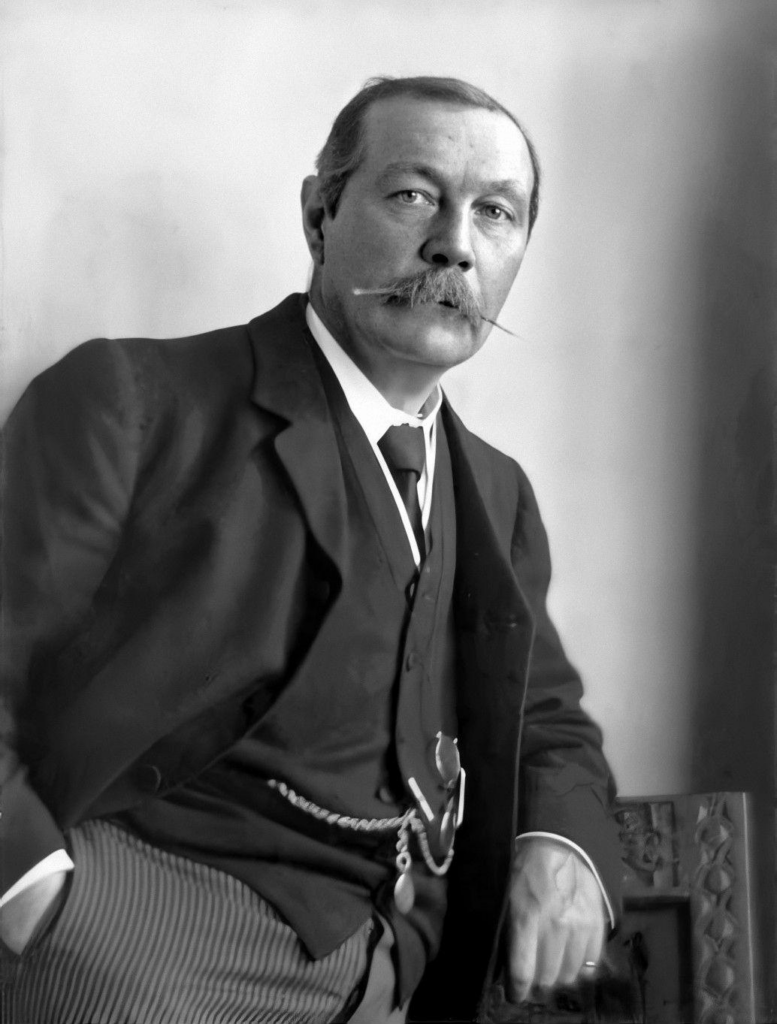
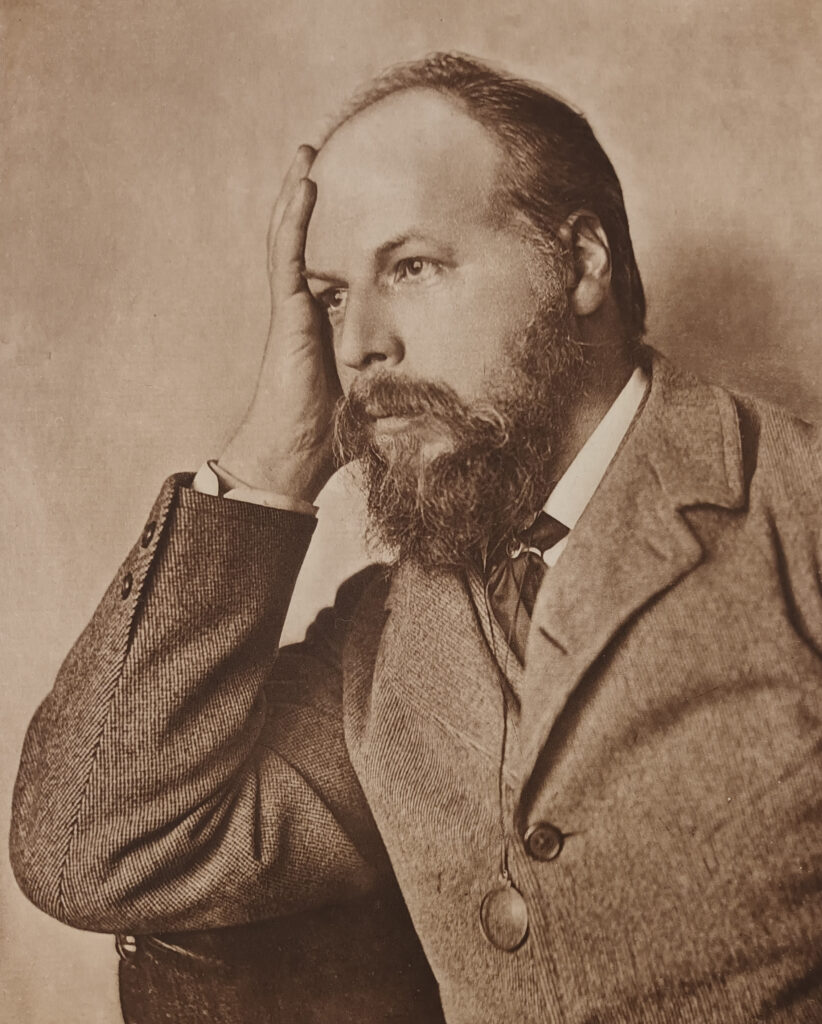
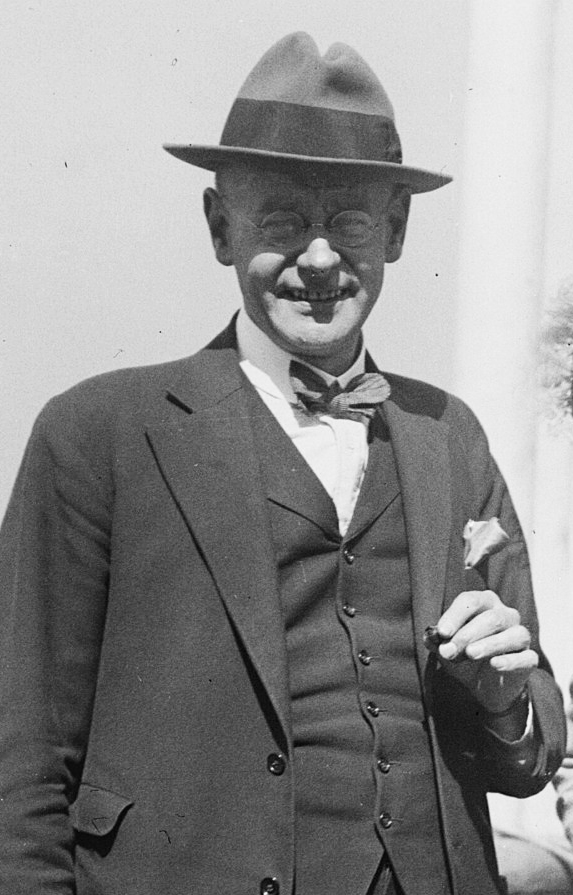
(Below: Arthur Conan Doyle in 1917; Hallam Tennyson; Arthur Conan Doyle’s Telegram of 3rd July 1906)
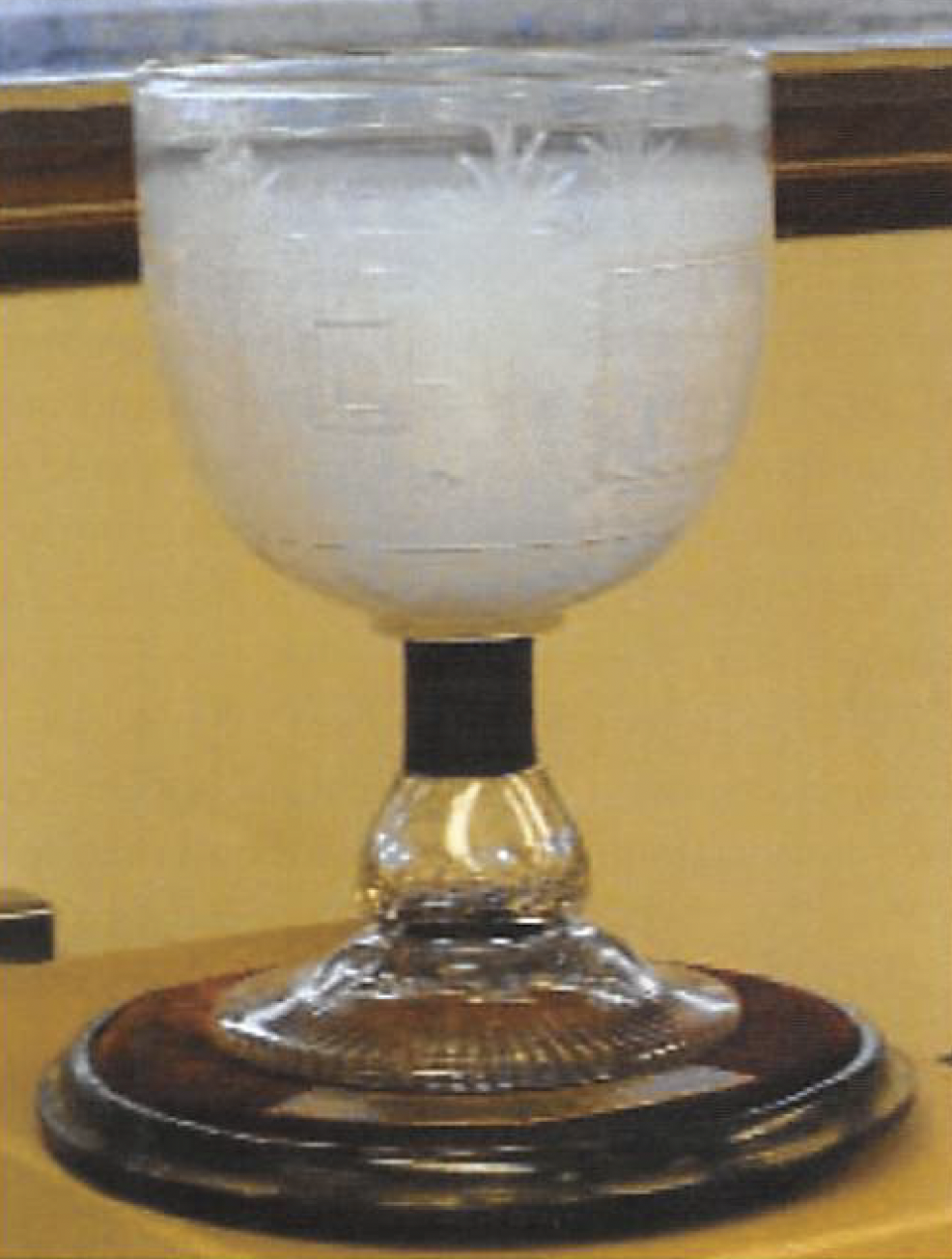
The club’s glass goblet, cracked and rather fragile, lies safely within the club ’s archive, held at Reading University.
The goblet itself is engraved as follows: “Presented by Tom Barry to his old friend and master W. Batty”. An inscription on the wooden base on which the goblet stands describes it as a ‘punch bowl’ and says it was presented to the Whitefriars Club by Friar Richard Gowing. Why and when is not clear from the goblet or base, but hidden in the correspondence or minutes of the time – well, who knows what may be found?
Could this “W Batty”’ in fact be William Betty, once called “the Wonder of the Age”, who, in the early nineteenth century, took British theatre by storm? I ask because I have just read a review of The Young Pretender by Michael Arditti, published by Arcadia. Betty, says Michael Arditti, was a child prodigy who was just eleven when he made his debut and was hailed as a second David Garrick. Further research is required.
The goblet is one of the many fascinating objects held in the archive.
Others include the early signed attendance books, which (as now) contain signatures of members and guests, indicate that dinners were often small in number of those attending, and often speaker-free. But then it seems they dined more regularly and often simply dined at a table reserved by the club for Whitefriars’ members to dine there. We have recently learnt that one of the old attendance books has deteriorated, and the committee has authorised work on stabilising its condition.
(From Friar Sir John Hammerton’s Other Things than War, London: Macdonald, 1943, pp. 17–22), extracted by Friar Colin Smythe
On the north side of Fleet Street just now there is a gaping space that was not made by German bombs. It is the site of the Anderton’s Hotel, long famous as a resort of journalists. As a newspaper reader in my teens, a year or two before I had the delight of setting foot in London, it was the only hotel there known to me by name, and I had come to picture it with a dapper little white-bearded man standing at the door looking nervously through his monocle at the summons presented to him by officers of the law commanding him to appear at Old Bailey on a charge of forgery.
He was what I was then planning to become – a journalist – and his name was Richard Piggott, usually known as Doctor Piggott. As a witness before the Parnell Commission he had been forced into admissions concerning certain letters that had appeared in The Times on “Parnellism and Crime” that left no doubt he had forged these with a view to damaging Parnell and improving his own finances, which were in constant need of improvement, for he was rather a dandy, and straight journalism did not pay too well in those days.
Piggott made a swift getaway to Madrid, where, substituting a pistol for his pen, he wrote “finis” to an adventurous career. It is the way of youth that such events outstay in memory many of greater importance, and although I was to know Anderton’s Hotel and one particular room therein for many a year afterwards, I am sure that in the thousand times I passed through its front door as a member of the Whitefriars Club during the first twenty years of the century, I seldom did so without this picture of the little white-bearded rascal flashing momentarily into my mind’s eye. The very name of Piggott is enough to light it up.
A history of the Whitefriars Club and its guests would include the names of nearly all the foremost men in journalism and public life of the past seventy years, and it would be well worth writing – a task that I might essay some day should I ever feel like emulating old Tegetmeier in his yearage. The club still exists, but in a state of suspended animation. It stood up no too badly to the shock of World War One, but World War Two was a reeling blow. Wars are highly inimical to the social amenities of clubland. Who knows but it may be revived (there’s still funds in its treasury) when we have disposed for ever of the disturbers of world peace, and what a night for the revived Whitefriars if the new brother of 1900, who was my junior in age by a matter of three years, could be induced to breathe new life into it by presiding over its first post-War reunion.
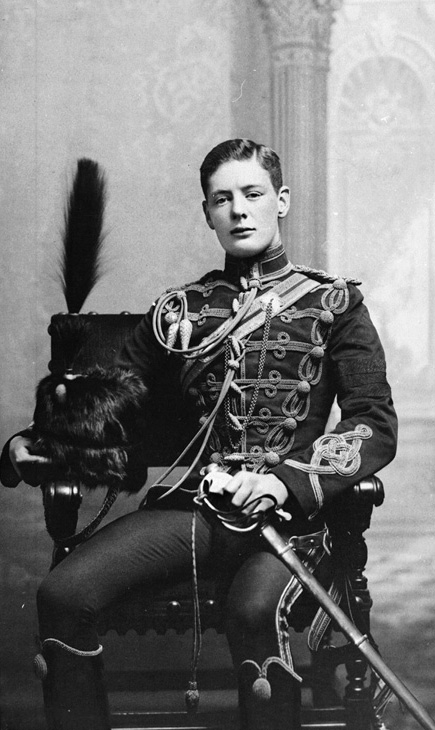
His name is Winston Spencer Churchill.
R.D. Blumenfeld, Coulson Kernahan, Max Pemberton, Robertson Nicoll were among the eleven admitted with Churchill to the brotherhood at the close on 1900, when “eighteen candidates were awaiting election”. I was one of the eighteen, but a month or so later the company of Anthony Hope and A.E.W. Mason shed some lustre on those of us who were allowed in.
The future leader of the British Commonwealth and Empire (as he prefers to call it) in the Second World War was then at the very outset of his amazing career as a man of affairs. Elected for Oldham on his second offering only a few months before, he was a newcomer to Parliament – a newcomer, however, bearing a name well honoured in British politics. All that was to make his life world-historic, that will engage many a biographer in future years, and may well produce an international Churchill literature rivalling that of Napoleon, was still to be.
Though only in his twenty-sixth year, he had already attained by his own energy of mind and character a great and rising reputation in the dual roles of soldier and man of letters – and had he not enjoyed the dramatic luck of being captured by the Boers and escaping from Pretoria in the best Romantic manner while serving as a lieutenant with the South African Light Horse and also acting as war correspondent of the Morning Post? No fewer than five noteworthy books already stood to his name. The first was The Story of the Malakand Field Force (he served with the 31st Punjab Infantry), which, for a young man of twenty-three, shows bright promise in its literary style as well as being informed with a fine sense of the deeper issues involved: no more “war reporter’s” record of a small frontier expedition this.
But a year later he was busy again combining the professions of arms and letters with Kitchener’s expedition to Khartoum, when the Daily Telegraph had the satisfaction of printing his messages from the field, and in The River War (1899) he gave us a book which for maturity of writing and observation is astonishing.
It is more likely to endure on its literary merits than G.W. Steevens’s With Kitchener to Khartoum, its only real competitor in the literature of that picturesque campaign, and Steevens was five years his senior: a biggish margin in the twenties. […] 1900 was the busiest year of his pen for many a year to come.