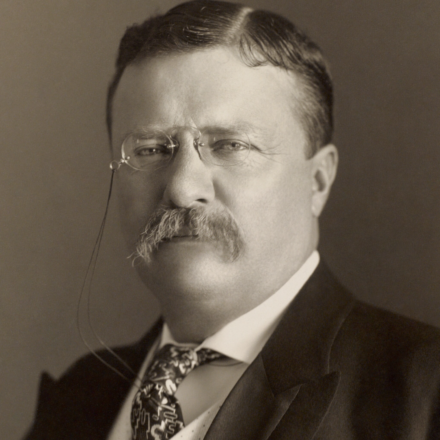
President Roosevelt was invited to speak at the Whitefriars Club, but, replying from Naivasha, British East Africa, on 6th August 1909 to the Honorary Secretary of the Club, Friar Joseph Shaylor, he wrote…
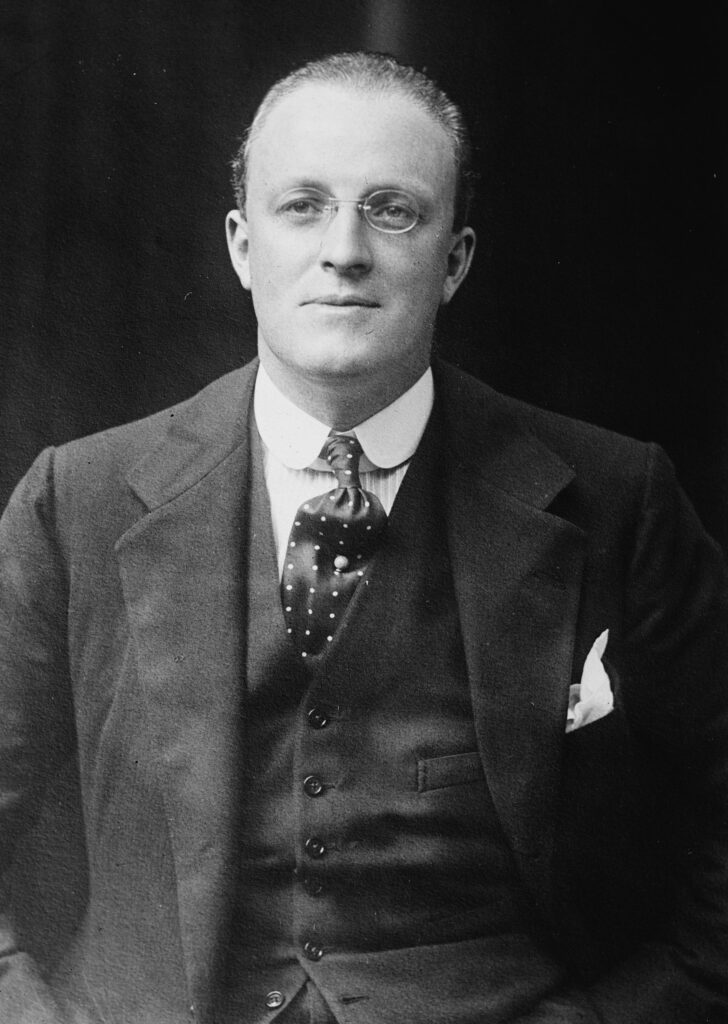
Sir Hugh Walpole (1884–1941) was a lecturer and best-selling author, with the historical novel Rogue Herries among his best-known and most enduring works.
Hugh Walpole spoke at the Whitefriars Club on 26th November 1920 on the subject of ‘The Crisis in the Book Trade’.
The prolific author of more than twenty novels, George Gissing (1857–1903) is today best remembered for novels such as Grub Street – which satirizes the literary and journalistic world of 1880s London – The Odd Women and The Nether World, which make him one of the finest satirists and social commentators of his time.
George Gissing attended the 20th April 1900 Dinner as a guest of Friar Edward Clodd.
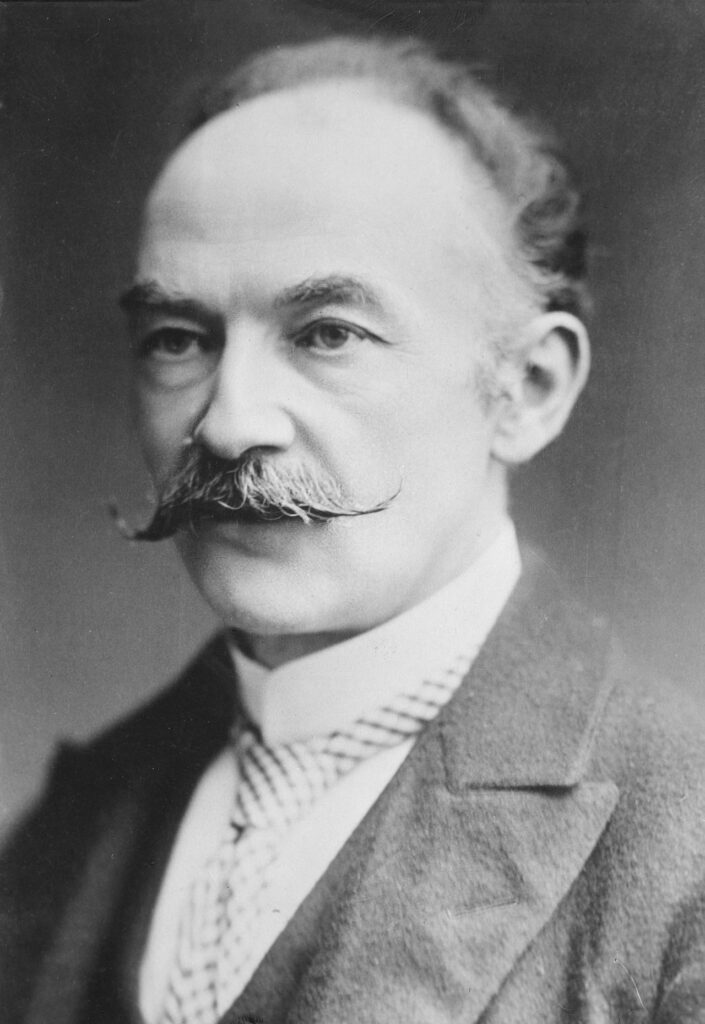
The Victorian novelist and poet Thomas Hardy (1840–1928) is most famous today for Far from the Madding Crowd, Jude the Obscure, Tess of the d’Urbervilles and other works set in the semi-fictional region of Wessex.
On 29th June 1901, the club organized a pilgrimage to Hardy Country, crowned by tea as guests of Mr and Mrs Thomas Hardy at Max Gate, Dorchester. Hardy was made honorary member of the Whitefriars Club later that year. He was due to speak on 29th October 1909, but was unable to attend, and a house dinner was held instead.
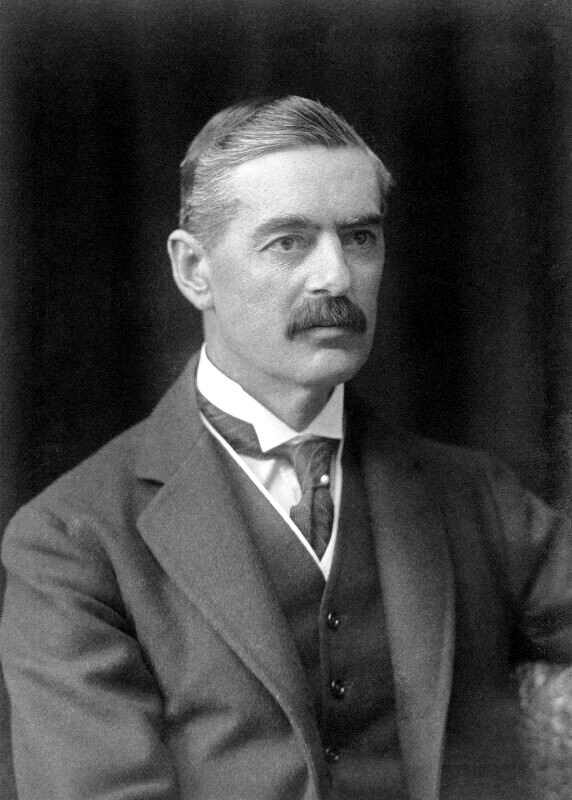
Neville Chamberlain (1869–1940), was a Conservative politician who served as prime minister of the United Kingdom from 1937 to 1940.
Neville Chamberlain spoke at the Whitefriars Club on 19th October 1923 on the subject of ‘Some Problems of Today’. At the time, he was Chancellor of the Exchequer during the first Baldwin ministry.
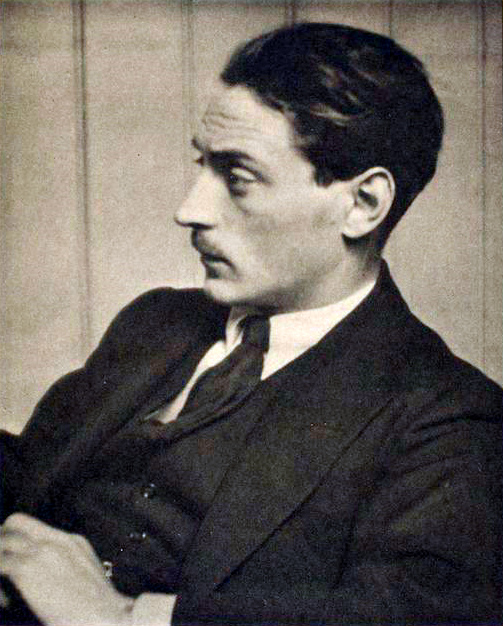
Sir Compton Mackenzie (1883–1972) was a Scottish writer of fiction, a biographer, a historian, a memoirist, as well as a cultural commentator.
Sir Compton Mackenzie spoke at the Whitefriars Club on the topic of ‘Romanticism and Realism’ on 4th November 1921. He also attended as a guest at the Ladies’ Dinner of 24th April 1925.
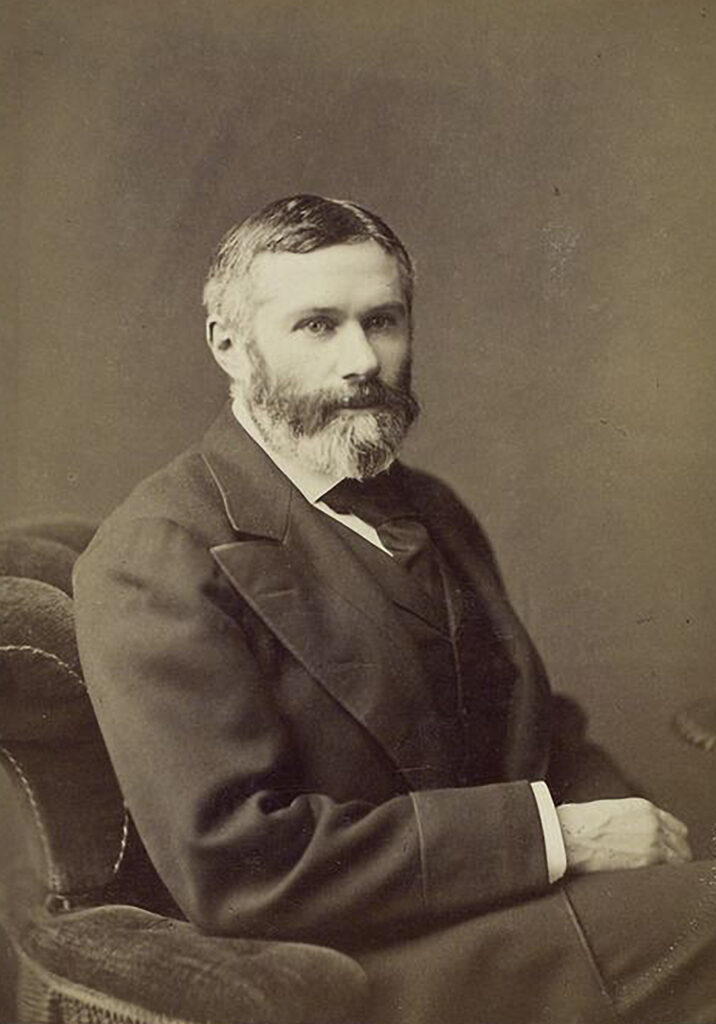
Sir George Otto Trevelyan, 2nd Baronet (1838–1928), was a politician, a statesman and the author of the several historical works, as well as the biography of his uncle, Lord Macaulay.
Trevelyan was club guest at the Annual Dinner at the Trocadero of 19th February 1904, when he spoke on the topic of ‘History Writing’. His fellow guest on that occasion was Guglielmo Marconi.
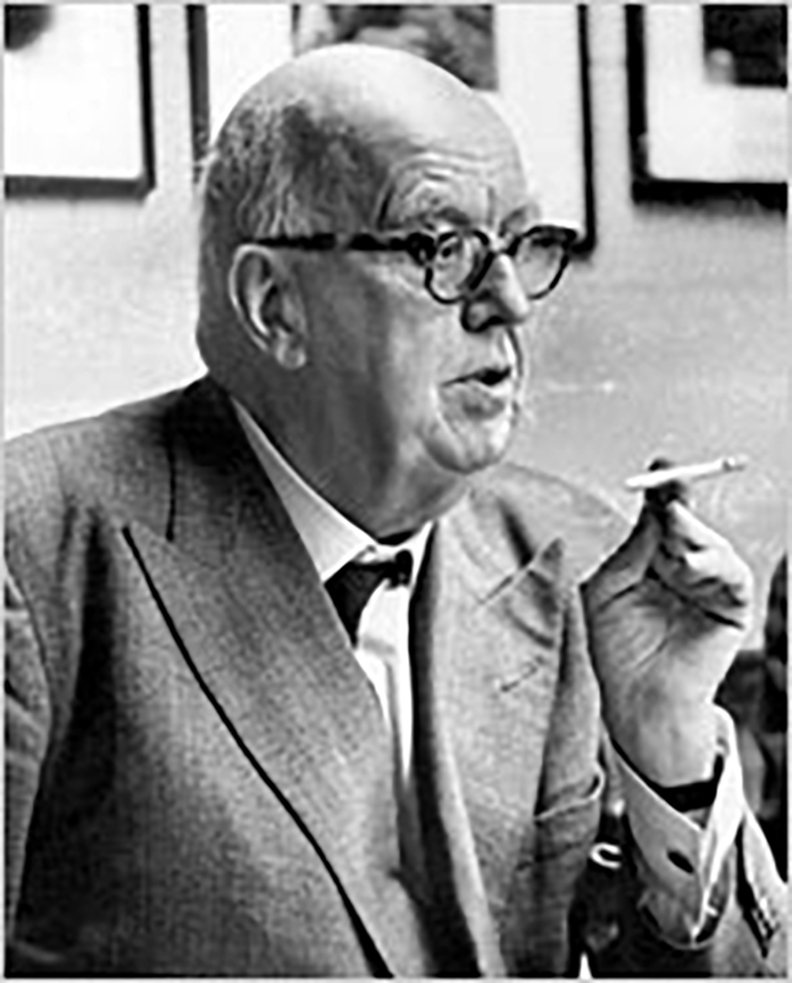
Trained as a physical chemist, C.P. Snow (1905–80) worked as a civil servant and was the author of series of novels known collectively as Strangers and Brothers.
C.P. Snow joined the Whitefriars Club in the 1950s. He was Prior of the Day on 24th April 1957 and spoke at the club on 28th May 1970.
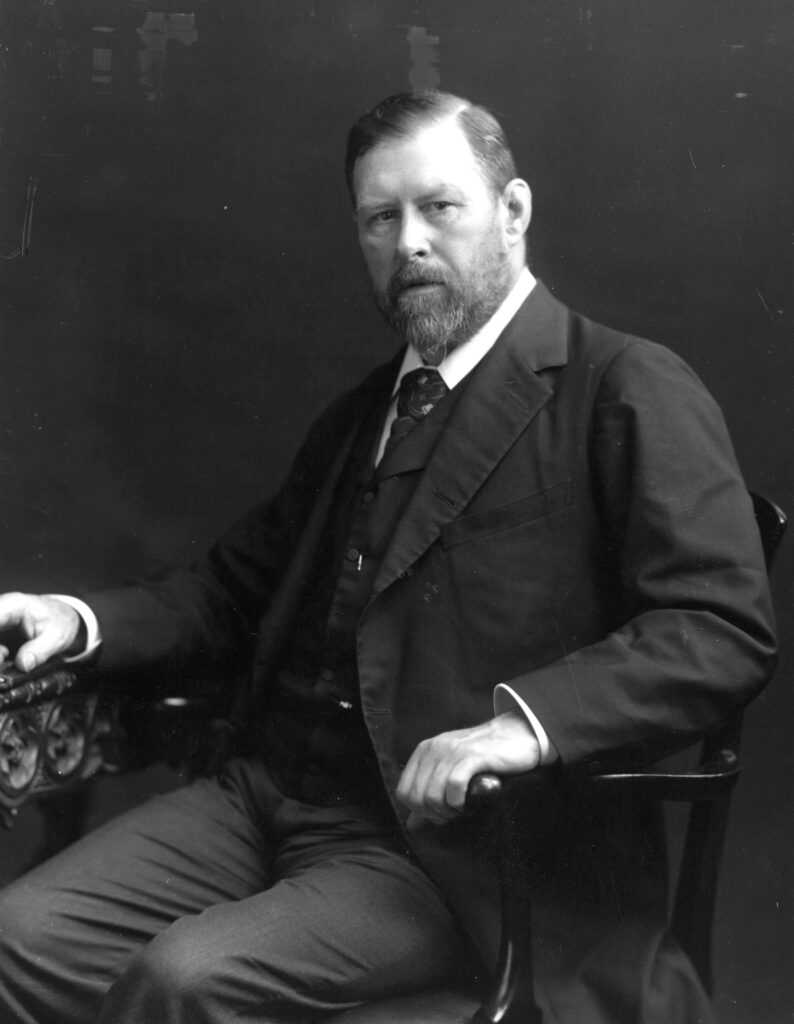
A prolific writer and an important figure of the London theatre world, Bram Stoker (1847–1912) is now best remembered for his 1897 novel Dracula, in which he established many of the enduring elements of the western vampire myth.
Bram Stoker was the club guest speaker at the Shakespeare Dinner of 14th April 1905. Having been made a Friar on 1st December that year, he attended several subsequent dinners, and spoke again at the club about ‘The State Censorship of Novels’ on 18th October 1907.
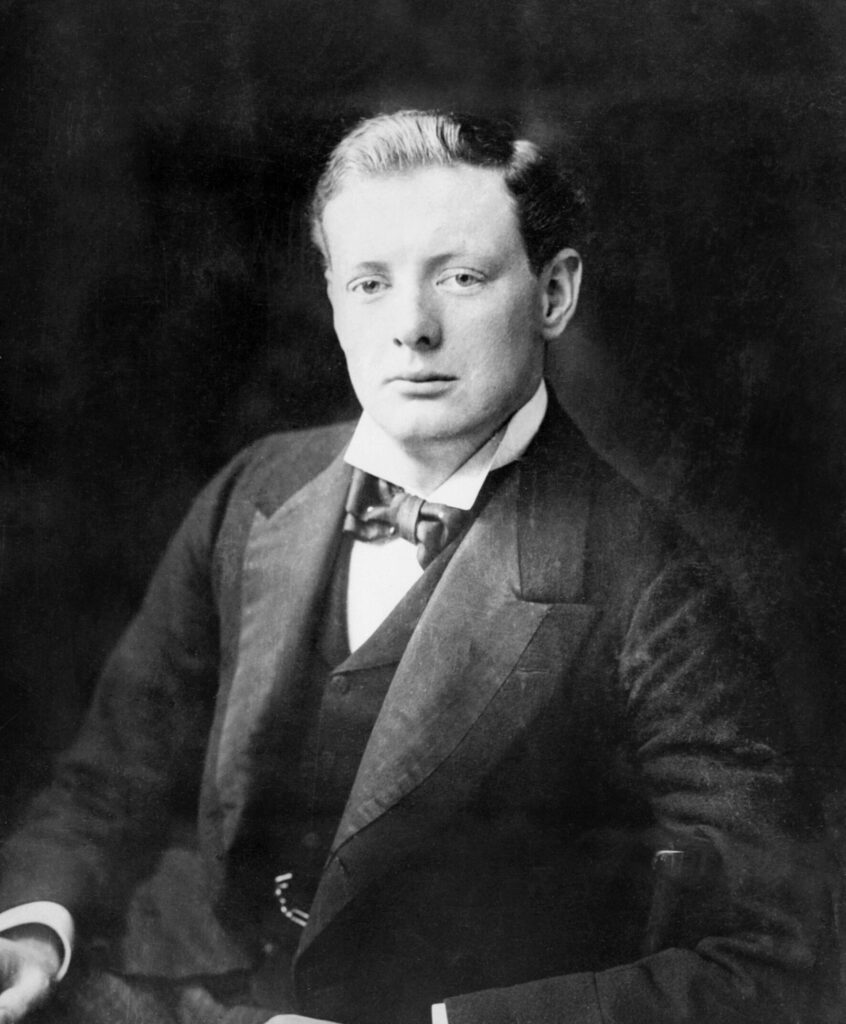
Friar Sir Winston Churchill (1874–1965) was a journalist, author, soldier, politician and statesman. He served twice as prime minister of the United Kingdom: the first time from 1940 to 1945, during the Second World War, and again from 1951 to 1955.
Sir Winston Churchill is one of the most eminent Friars in the history of our club. He spoke at the club for the first time on 5th October 1900, about his career as a war correspondent. He later became a Friar, acting on many dinners as Prior of the Day.
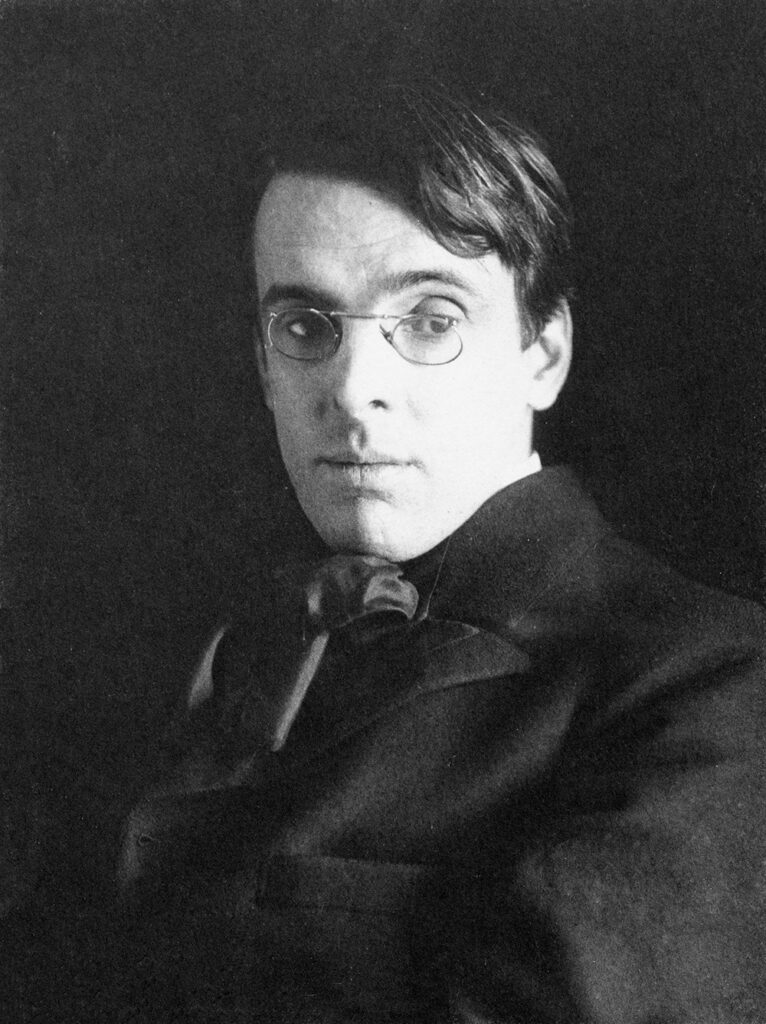
W.B. Yeats (1865–1939) is one of the greatest poets of the twentieth century, as well as a dramatist, critic and essayist. Closely associated with the Irish Literary Revival, he was awarded the Nobel Prize for Literature in 1923.
Yeats attended as a guest on 23rd November 1900, when he spoke on ‘The Depredation Which We Call Progress’. He returned to the club four years later, on 11th November 1904, as a guest of the Prior of the Day, Friar Osman Edwards. On that occasion he is reported to have made “an impressively mystical speech” as he discussed the points touched by the opener.